How are digital payment systems shaping Nepal’s cashless future?

Nepal is experiencing a concealed economic transformation because it is transitioning from paper currency traditions toward digital financial management. Traditional paper-based transactions continue in bazaars although digital payment systems are changing Nepal’s economy. Additionally, It is creating an opportunity to eliminate paper money usage in the future.

The transformation toward digital platforms requires more than being a temporary trend because it is essential. Digital payment systems connect urban centers with remote locations throughout the country. Additionally, it is furnishing people in both areas with convenient, protective, and accessible solutions while improving financial inclusivity. In the same vein, the financial direction of Nepal is transformed by these technology systems.

The Rise of Mobile Banking: Banking at Your Fingertips

Mobile banking has emerged as a game-changer, democratizing access to financial services. With a high mobile penetration rate, even in rural areas, Nepalese citizens can now manage their finances with a few taps on their smartphones.

  • Transfer funds instantly: Sending money to family and friends, paying bills, or making small business transactions has become effortless. For instance, sending money to a relative in a remote village during festivals, was previously a time-consuming journey. But look at this now it is a matter of seconds.
  • Pay utility bills: Electricity, water, internet, and phone bills can be paid online, saving time and eliminating the need to stand in long queues.
  • Access mini-statements and check balances: Monitoring accounts activity and managing finances has become more transparent and convenient.
  • Recharge mobile phones: Prepaid mobile recharges, a frequent necessity, can be done instantly, ensuring seamless connectivity.

eSewa and Khalti: Digital Wallets Revolutionizing Transactions

Digital wallets like eSewa and Khalti have become household names, offering a plethora of services beyond basic fund transfers. These platforms have significantly impacted daily life by:

  • Facilitating online shopping: With the growing e-commerce sector, digital wallets provide a secure and convenient way to pay for goods and services online.
  • Enabling payments for services: From booking movie tickets and paying for restaurant meals to purchasing bus tickets and paying for online education, these wallets offer a wide range of payment options.
  • Offering cashback and discounts: These platforms often provide attractive incentives, encouraging users to embrace digital payments. For example, a user paying an electricity bill via eSewa might receive a small cashback.
  • Expanding to merchant payments: More and more small businesses and vendors are accepting payments through these wallets, creating a wider ecosystem of digital transactions. In addition to these, a local tea stall might now accept payment via the Khalti QR code.

The Impact on Financial Inclusion and Economic Growth

The proliferation of digital payment systems is having a profound impact on Nepal’s financial inclusion and economic growth:

  • Bridging the rural-urban divide: Digital payments are reaching underserved populations in remote areas, providing them with access to essential financial services. This is particularly crucial in a country with challenging geographical terrain.
  • Promoting transparency and reducing corruption: Digital transactions leave a clear audit trail, reducing the scope for corruption and promoting transparency in financial dealings. 
  • Boosting small businesses and entrepreneurship: Digital payments empower small businesses to expand their reach and access new markets, fostering entrepreneurship and economic growth. A small handicraft business in Pokhara can now accept payments from tourists via eSewa, increasing its potential customer base. 
  • Encouraging formal financial sector participation: By offering convenient and accessible alternatives to cash, digital payments are encouraging more people to participate in the formal financial sector. 
  • Increased safety: Carrying large sums of cash is risky. Digital wallets and mobile banking reduce this risk significantly.

Challenges and the Road Ahead

Despite the significant progress, Nepal’s journey towards a cashless future is not without its challenges:

  • Internet connectivity and infrastructure: Reliable internet connectivity is crucial for the widespread adoption of digital payments. In remote areas, infrastructure limitations continue to pose a challenge.
  • Digital literacy: Many people, especially in rural areas, lack the digital literacy required to use digital payment systems effectively.
  • Security concerns: Building trust in digital payment systems is essential. Addressing security concerns and protecting users from fraud is crucial.
  • Regulatory framework: A robust and adaptable regulatory framework is needed to ensure the stability and security of the digital payment ecosystem.
  • Adoption by Merchants: While urban areas are quickly adapting, more effort is needed to encourage smaller merchants and vendors in rural areas to accept digital payments.

The Nepali government, along with financial institutions and technology companies, is actively working to address these challenges. Initiatives like digital literacy campaigns, infrastructure development projects, and the implementation of robust regulatory frameworks are crucial for accelerating the transition toward a cashless economy.

To conclude, Digital payment systems are undeniably shaping Nepal’s financial future. From mobile banking to digital wallets, these innovative solutions are transforming the way people transact. It is empowering individuals, and fostering economic growth. As Nepal continues to embrace digital technologies, it is poised to unlock its full potential and build a more inclusive and prosperous future for its citizens. The transition from a cash-dominated economy to a digitally driven one is a journey. Nepal is resolutely taking those steps, one digital transaction at a time.

For more informational blogs, visit the link.

Linux for Beginners: A Beginner-Friendly Introduction on why to choose Linux

Introduction:

In the world of computers and the internet, most people compete with Mac and Windows, just like comparing iOS and Android not knowing there is something known as Linux. If you are a tech student or one into computers, you might have heard about Linux somewhere. If you’re new to Linux and want to understand why it’s gaining popularity, then this guide, “Linux for Beginners” is for you. 

Linux is a powerful, secure, and open-source operating system that has become a viable alternative to Windows and macOS. Whether you’re a student, developer, or casual user, Linux offers flexibility and customization to suit your needs. But where have you used it is the question. 

Those who have not used Linux or maybe have heard it for the first time should know why it is one of the greatest fields to explore. And if you think that it has a great field then why is it not being known as an alternative to Windows and ios, well in reality Linux is used more than these actually, the majority of the world’s cloud computing servers are Linux based. It is a dominating OS for web servers, database servers, and other applications that power the majority of internet services. It is also used in embedded systems like smartwatches, Bluetooth speakers, thermostats cars, and many more.

The Android that the majority of you talk about is based on Linux itself, not just that more than 500 computers are using Linux as their operating system, and hackers or expert programmers prefer Linux compared to other OS. So the question arises should we switch to Linux?

Should we switch to Linux?

We just talked about Linux being used by hackers and developers, not just that I also told you guys about Linux being used in the supercomputer so it means Linux is really fast and cool right? Well not exactly. The majority of Linux is perceived faster because there is no such bloatware like Windows and is lightweight compared to MacOS, so the majority of tasks might feel better in performance compared to other OS but this will depend on your system. I told you about the system cause Linux runs on almost anything and I mean it. Let me tell you more about its advantages.

Reasons to Choose Linux

  1. Security and Privacy 

Unlike Mac and Windows, Linux is far secure with strong security features such as no such things as forced updates which are the most irritating things in the majority of OS, and no bloatware and spyware. Unlike other OS, Linux does not track its users and try to fetch their user data, Linux instead provides you full control over the system and lets you decide what to do. One fun thing about is that the majority of viruses in the world are designed for either Windows or MacOS so by default there are very less viruses ever designed that work on Linux making it more secure

  1. Open Source and Free: 

I just told you about how Linux gives us whole control and is transparent to us and this is what developers love about it and thus call it Open source as we can get to know how it was made and how to configure it all on the internet and all for free. So instead of paying for licenses for OS like Windows and macOS, we can just get Linux for free. Just being free makes this a great choice for students and budget-conscious users

  1. Performance and Efficiency

I talked about hardware to you and why I brought it was because Linux can run on almost all hardware, Linux is lightweight and optimized for performance making it a great choice to revive your old laptop that becomes buggy and slow due to Windows. Just install Linux and feel it as if it’s new. 

Things to remember before Downloading Linux as a beginner to Linux

  1. Hardware Compatibility: 

Personally, when I downloaded Linux on old hardware there were no such issues like this but when I switched to new-gen laptops a lot of problems arose such as hardware not supporting, divrives not responding and the keyboard not functioning. These are common in Linux as the Linux you download is not fully built according to your laptop but in general consideration of what a simple device looks, so as you get more new gen computer you need to switch to better Linux or download all the hardware and drivers to the current Linux which might be quite hard for new users.

  1. Software compatibility:

Not just hardware and drivers, so many software are not compatible with Linux too for instance majority of editing software like MS Office, Adobe Platform, and more are not available in Linux normally, we need to hardcode and download them from a third, and still it may not support fully. While Linux does provide you alternatives to this application they may not be that good as you are familiar with the original ones in Windows and MacOS

  1. Gaming

While Linux gaming has come a long way, many major games still don’t support Linux natively, and you may need Wine or Proton (via Steam) to run Windows-based games, which isn’t always perfect and can require extra configuration.

  1. Learning Curve

Linux has a steeper learning curve, especially if you’re used to graphical user interfaces (GUIs) on Windows or macOS. The majority of you have not used a terminal at all and the majority have a GUI for everything so switching from that is hard. You might have to use the terminal (command line) for certain tasks, and troubleshooting often requires technical knowledge. It requires more and more manual setup which might be hard for first-time users.

A Ray of Hope For the Passionate Ones

With so harsh truth about Linux majority of people have already given up using Linux, but is it bad? Can we use Linux despite these hurdles? Absolutely. And today, we’re here to shine a light on why Linux is still worth it. It may not be a smooth ride but a ride you will always cherish. 

We can solve most of these problems actually, firstly for driver hardware and software, we can choose a proper distro for this. What is a distro you say? So Linux has a lot of Operating Systems you can choose from each providing a collection of software packages such as system libraries, utilities, application software, and a desktop environment which makes each distro unique.

And if you are a beginner and want to experience Linux with more GUI like your old OS but have Linux in it I have the best suggestion for you which supports a lot of your favorite Windows and Mac software and your deceived hardware and drivers too — introducing Zorin OS!

Why Choose Zorin OS

1. Windows-Like Interface

    Adapting to the Linux desktop environment stands as the biggest problem like we said for people new to the Linux operating system. The Zorin OS desktop adopts an interface that resembles Windows which eases the transition process for Windows users. It also has an appearance for macOS users which is the same as Mac.

    2. Easy Installation Process

      The installation of Zorin OS remains simple because the user-friendly setup wizard provides an easy experience. Users can select either dual-booting Linux with Windows or performing a complete Windows replacement with Zorin OS which means if you are new you got the option to use both Windows and Linux at the same time.

      3. Pre-Installed Essential Software

        The pre-installed software package of Zorin OS includes various essential applications such as:

        • LibreOffice (alternative to Microsoft Office)
        • Firefox or Chrome (web browsers)
        • Thunderbird (email client)
        • GIMP (alternative to Photoshop)

        Not just this but you can be given an option to download special drivers for NVIDIA so you do not have any hardware issues and driver issues.

        4. Runs Well on Old Hardware

          Zorin OS functionality excels on outdated computer systems. Zorin OS serves as a performance booster which provides better functionality to aged laptops having Windows issues.

          5. Compatibility with Windows Applications 

            Through Wine and PlayOnLinux both Zorin OS provide built-in capabilities to execute Windows application programs without difficulties. Users who require Microsoft Office and Windows-specific programs will find a groundbreaking solution with Zorin OS.

            6. Strong Community Support 

              Users of Zorin OS can access help through its active community where members provide question responses. Zorin OS inherits Ubuntu’s expansive documentation base as well as support forums because it uses the Ubuntu Foundation. So if you are new, want to try something new, or want to change something in Zorin, you have the company of people who are veterans or have much experience in that field helping you openly and supporting you. This is what makes Linux beautiful.

              Final Thoughts

              Linux functions as more than an operating system because it provides users with a potent system that combines protection with adaptable functionality compared to Windows and macOS. You get full system control and maintain privacy protection with Linux and it operates efficiently even on outdated computers. All users including students and developers as well as anyone seeking system changes will find value in using Linux.

              That said, Linux isn’t perfect. Certain software programs including Adobe products together with select Windows-oriented computer games function with limited effectiveness on Linux. People who use Windows typically encounter difficulties during their transition to the operating system. The open-source distribution Zorin OS together with other user-friendly distributions makes Linux system transitions seamless.

              Zorin OS provides an interface specifically made for beginners alongside an easy installation process and preinstalled support for numerous applications. The platform guides new Linux users through the learning process while offering the chance to learn without excessive stress.

              So why not give it a try? The software allows you to test it without making any long-term commitments by letting you install it alongside Windows or run it from a USB drive. Linux could prove to be the system transformation you have been seeking so far.

              Explore more information Blog here.

              The AI Dilemma for Junior Developers: A Shortcut or a Learning Roadblock?

              Artificial Intelligence (AI) has become a hot topic in the tech industry, with opinions ranging from it being a revolutionary boom to a potential doom. It has raised a big question: Artificial Intelligence dilemma, a shortcut or a Roadblock? AI has undeniably transformed the field of technology, significantly speeding up development processes. Before the advent of Artificial Intelligence(AI) tools, developing a full-stack web application could take over a month. Now, with clear requirements, it can be accomplished in less than a week. This acceleration is indeed fascinating, especially for senior developers who can leverage AI to enhance their productivity.

              However, the impact of AI on junior developers is a different story. While AI tools offer a quick path to creating sophisticated applications, they also pose a significant risk: over-reliance. Junior developers, who are just entering the tech field, may become too dependent on these tools, potentially hindering their long-term growth and understanding of fundamental concepts.

              The Artificial Intelligence Dilemma: Efficiency vs. Learning

              Imagine two developers, a junior and a senior tasked with building a full-stack e-commerce web application. The junior developer is allowed to use any AI tool, while the senior developer must rely solely on their technical skills, Stack Overflow, Reddit, and other resources. Initially, the junior developer’s application might appear more polished and feature-rich. However, the true test comes when both are asked to make small changes without the aid of AI tools.

              The junior developer, accustomed to AI assistance, might struggle to implement these changes efficiently and bug-free. In contrast, the senior developer, with a deep understanding of the fundamentals, can make the necessary adjustments smoothly. This scenario highlights a critical issue: Junior developers may be skipping essential learning steps by relying too heavily on AI tools.

              The Importance of Fundamentals

              One of the major problems observed in junior developers today is a lack of interest in learning the fundamentals. They often want to jump straight into advanced topics and tools without building a strong foundation. This approach can lead to a superficial understanding of technology, making it difficult to troubleshoot issues or adapt to new challenges without AI assistance.

              The Future of Software Development

              Despite the concerns, it’s unlikely that software developers or engineers will lose their jobs to AI. Instead, Artificial Intelligence will likely change the workflow, making processes more efficient. The role of a software engineer might evolve, but it won’t be replaced by AI entirely. The idea of “Software Engineer 2.0” being synonymous with “Machine Learning Engineer” is a misconception. The future will still require developers with a solid grasp of fundamentals, who can use AI tools as an enhancement rather than a crutch.

              Adapting to the Artificial Intelligence (AI)-driven workforce

              A recent study conducted by Pearson, in partnership with ServiceNow, provides an extensive analysis of the potential effects of AI and automation on the economies of six countries (U.S., UK, Germany, India, Australia, and Japan) and how technology-based roles are expected to evolve. Despite concern from potentially affected groups, this research shows that junior application developers will remain valuable even as AI continues to evolve. The study suggests that in the coming years, those junior developers who can understand and adapt to their new roles will be best prepared to thrive in the AI-driven workforce of the future.

              The rise of AI and automation significantly impacts the skills required for junior developers to succeed in the tech industry. By analyzing their workflows and identifying areas where automation can provide the most significant value, developers can implement automation tools and processes, freeing time for more complex work. Project-based learning is a popular and effective way for new developers to gain hands-on experience and apply their coding skills to real-world challenges. However, this approach also presents its own set of unique challenges. Many new developers encounter pitfalls, but mastering code quality can set them apart in a competitive industry.

              Conclusion

              AI tools offer tremendous potential for accelerating development and enhancing productivity. However, for junior developers, over-reliance on these tools can be a double-edged sword. While they provide a quick path to creating complex applications, they can also hinder the learning of essential fundamentals. The key is to strike a balance: use AI tools to augment your skills, but never at the expense of understanding the core principles of software development. By doing so, junior developers can grow into well-rounded, competent professionals capable of adapting to the ever-evolving tech landscape.

              Analyzing Netflix Movie Trends: Are Movies Getting Shorter?

              I recently conducted a data analysis project on Netflix movies, and I’m excited to share some intriguing insights with you! In a world where binge-watching has become the norm, I set out to investigate whether movies on Netflix are getting shorter over time. The answer? Well, it’s not that straightforward.

              🍿 Movie Duration Trends: While some movies have indeed become more concise, it’s essential to note that not all genres are following this trend.

              Here’s what I discovered:

              📉 Decline in Length: Genres like Children’s and Documentaries have shown a decline in movie length. It seems that audiences in these categories are favoring shorter, more focused content.

              📈 Consistency: Interestingly, genres like Stand-up comedy have remained relatively consistent in their movie durations. This suggests that these genres are maintaining a stable viewing experience.

              Further Exploration:

              1. Loading your friend’s data into a dictionary

              Netflix! What started in 1997 as a DVD rental service has since exploded into the largest entertainment/media company by market capitalization, boasting over 200 million subscribers as of January 2021.

              Given the large number of movies and series available on the platform, it is a perfect opportunity to flex our data manipulation skills and dive into the entertainment industry. Our friend has also been brushing up on their Python skills and has taken a first crack at a CSV file containing Netflix data. For their first order of business, they have been performing some analyses, and they believe that the average duration of movies has been declining.

              As evidence of this, they have provided us with the following information. For the years from 2011 to 2020, the average movie durations are 103, 101, 99, 100, 100, 95, 95, 96, 93, and 90, respectively.

              If we’re going to be working with this data, we know a good place to start would be to probably start working with pandas. But first we’ll need to create a DataFrame from scratch. Let’s start by creating a Python object covered in Intermediate Python: a dictionary!

              2. Creating a DataFrame from a dictionary

              To convert our dictionary movie_dict to a pandas DataFrame, we will first need to import the library under its usual alias. We’ll also want to inspect our DataFrame to ensure it was created correctly. Let’s perform these steps now.

              3. A visual inspection of our data

              Alright, we now have a pandas DataFrame, the most common way to work with tabular data in Python. Now back to the task at hand. We want to follow up on our friend’s assertion that movie lengths have been decreasing over time. A great place to start will be a visualization of the data.

              Given that the data is continuous, a line plot would be a good choice, with the dates represented along the x-axis and the average length in minutes along the y-axis. This will allow us to easily spot any trends in movie durations. There are many ways to visualize data in Python, but matploblib.pyplot is one of the most common packages to do so.

              Note: In order for us to correctly test your plot, you will need to initalize a matplotlib.pyplot Figure object, which we have already provided in the cell below. You can continue to create your plot as you have learned in Intermediate Python.

              4. Loading the rest of the data from a CSV

              Well, it looks like there is something to the idea that movie lengths have decreased over the past ten years! But equipped only with our friend’s aggregations, we’re limited in the further explorations we can perform. There are a few questions about this trend that we are currently unable to answer, including:

              1. What does this trend look like over a longer period of time?
              2. Is this explainable by something like the genre of entertainment?

              Upon asking our friend for the original CSV they used to perform their analyses, they gladly oblige and send it. We now have access to the CSV file, available at the path "datasets/netflix_data.csv". Let’s create another DataFrame, this time with all of the data. Given the length of our friend’s data, printing the whole DataFrame is probably not a good idea, so we will inspect it by printing only the first five rows.

              5. Filtering for movies!

              Okay, we have our data! Now we can dive in and start looking at movie lengths.

              Or can we? Looking at the first five rows of our new DataFrame, we notice a column type. Scanning the column, it’s clear there are also TV shows in the dataset! Moreover, the duration column we planned to use seems to represent different values depending on whether the row is a movie or a show (perhaps the number of minutes versus the number of seasons)?

              Fortunately, a DataFrame allows us to filter data quickly, and we can select rows where type is Movie. While we’re at it, we don’t need information from all of the columns, so let’s create a new DataFrame netflix_movies containing only titlecountrygenrerelease_year, and duration.

              Let’s put our data subsetting skills to work!

              6. Creating a scatter plot

              Okay, now we’re getting somewhere. We’ve read in the raw data, selected rows of movies, and have limited our DataFrame to our columns of interest. Let’s try visualizing the data again to inspect the data over a longer range of time.

              This time, we are no longer working with aggregates but instead with individual movies. A line plot is no longer a good choice for our data, so let’s try a scatter plot instead. We will again plot the year of release on the x-axis and the movie duration on the y-axis.

              7. Digging deeper

              This is already much more informative than the simple plot we created when our friend first gave us some data. We can also see that, while newer movies are overrepresented on the platform, many short movies have been released in the past two decades.

              Upon further inspection, something else is going on. Some of these films are under an hour long! Let’s filter our DataFrame for movies with a duration under 60 minutes and look at the genres. This might give us some insight into what is dragging down the average.

              8. Marking non-feature films

              Interesting! It looks as though many of the films that are under 60 minutes fall into genres such as “Children”, “Stand-Up”, and “Documentaries”. This is a logical result, as these types of films are probably often shorter than 90 minute Hollywood blockbuster.

              We could eliminate these rows from our DataFrame and plot the values again. But another interesting way to explore the effect of these genres on our data would be to plot them, but mark them with a different color.

              In Python, there are many ways to do this, but one fun way might be to use a loop to generate a list of colors based on the contents of the genre column. Much as we did in Intermediate Python, we can then pass this list to our plotting function in a later step to color all non-typical genres in a different color!

              Note: Although we are using the basic colors of red, blue, green, and black, matplotlib has many named colors you can use when creating plots. For more information, you can refer to the documentation here!

              9. Plotting with color!

              Lovely looping! We now have a colors list that we can pass to our scatter plot, which should allow us to visually inspect whether these genres might be responsible for the decline in the average duration of movies.

              This time, we’ll also spruce up our plot with some additional axis labels and a new theme with plt.style.use(). The latter isn’t taught in Intermediate Python, but can be a fun way to add some visual flair to a basic matplotlib plot. You can find more information on customizing the style of your plot here!

              10. What next?

              Well, as we suspected, non-typical genres such as children’s movies and documentaries are all clustered around the bottom half of the plot. But we can’t know for certain until we perform additional analyses.

              Congratulations, you’ve performed an exploratory analysis of some entertainment data, and there are lots of fun ways to develop your skills as a Pythonic data scientist. These include learning how to analyze data further with statistics, creating more advanced visualizations, and perhaps most importantly, learning more advanced ways of working with data in pandas. This latter skill is covered in our fantastic course Data Manipulation with pandas.

              We hope you enjoyed this application of the skills learned in Intermediate Python, and wish you all the best on the rest of your journey!

              -Bishesh Giri

              Automatic Panipuri Water Dispenser At Sunway College 

              At Sunway College Kathmandu, our IT and research club has developed a creative IoT Based Water dispenser. The Automatic Panipuri Water Dispenser senses when we place a puri below its dispenser pipe, the devices sense the object and fill the puri with a flavored panipuri drink. This gadget has been the pride of Sunway college and also a major source of attraction at different events. Let’s know more details on the devices used, the building process, and the working mechanism of this tech from our student Sabin Shrestha.

              Hello, my name is Sabin Shrestha, and I’m now enrolled in the third semester at Sunway College Kathmandu, Nepal.

              There are many automated devices developed and researched today utilizing IoT. IoT has already made life simpler for us in several ways. It greatly influences how we live our daily lives. However, this initiative is just another one that solicits donations. The project is an automated Panipuri water dispenser, as one would assume from the name.

              What actually is an Automatic Panipuri Water Dispenser?

              An automated PaniPuri water dispenser is a gadget that delivers flavored water in specified amounts by automatically sensing the Puri without manual effort. The panipuri’s flavored water is dispensed using this technique. The system uses electronic components such as an Arduino, a breadboard, a jumper, a relay, and an adjustable IR sensor. The system works on the straightforward premise of detecting an item beneath the sensor and signaling the relay to activate the switch.

              Devices used

              Keywords: Arduino, IoT, Relay, Adjustable IR Sensor

              Benefits of automatic water dispenser

              Not just for panipuri, this device is usable in many fields. Below are a few benefits of having an automatic water dispenser:

              • Portable
              • Less amount of human effort
              • Fetch the flavored water automatically
              • Less use of the hand.
              • Conventional
              • Increase sales

              Working Process of the Automatic Panipuri Water Dispenser

              The device follows 5 different steps to dispense flavored water. Let’s break it down and understand.

              1. Turn on the device
              2. Sense Objects
              3. Arduino receives data from the sensor
              4. Transmits signals to the relay to turn on the dispenser
              5. Fetch flavored water.
              Working Process of the Automatic Panipuri Water Dispenser

              Methodology of developing an automatic water dispenser

              The methodology consists of the following steps for making this project real:

              Research and survey:

              Research is crucial to any project. Before starting this project, first and foremost we researched past works, designs, and projects. Other, comparable devices, such as automatic sanitizers, have been the subject of research.

              System Design:

              In system design, we design the device considering its architecture, shape, and size. Also, We also list out the components for the system and plan the system operation and hardware requirements for the project. Additionally, we designed a 3D print.

              Software Implementation

              In the software implementation process, we create Arduino code in the Arduino IDE according to the design and upload the code to Arduino for prototyping and testing.

              Prototyping & Testing

              In, Prototyping and testing phase, we test the working of the device with a small developed prototype.

              Device and component integration:

              After the prototype, we integrate all devices and components per design and code. The materials such as Arduino, an Adjustable IR Sensor, jumper wires, wires, a USB charger, pipe, wiring strips, 12 v chargers, stalls, etc.

              Data collection & Analysis

              In this stage, we gather data and analyze it as necessary. From our analysis, we found, that the object should be 5–6 cm away to sense by the system. And, It takes 3 seconds to get the flavor-infused water from the bucket once the thing is discovered.

              Result

              In the result phase, we gather the outcome. As a consequence, we validate if the system operates as intended. Although the dispenser has to be cleaned every day while it is in use. But the good thing is, This project is working and put into action effectively.

              Conclusion

              The Automated Panipuri water dispenser is a gadget that senses the Puri and automatically fetches the flavor-infused water. This method can be handy in restaurants, cafes, hotels, etc. Moreover, the gadget has several benefits as we discussed, and is frequently used for automated dispensing in Nepal and other nations too.

              What to study after +2? Data Science and Artificial Intelligence – A career that never ends

              To be ahead of today’s trend and gain a competitive advantage, Data Science is the course/career that you should choose. Let us tell you why.

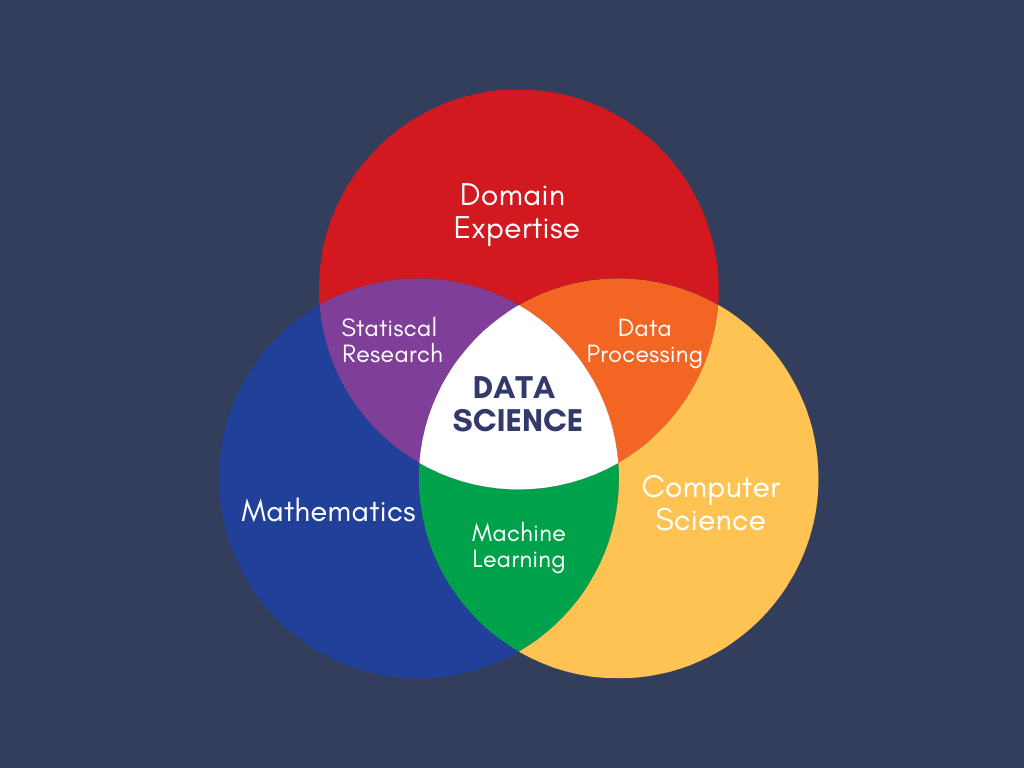
              Bachelor in Data Science is a multidisciplinary field where data is collected from all corporations. In data science, the data is collected, analyzed, and interpreted to prove or disapprove of any hypothesis. It involves mathematical and scientific principles to find answers to questions from the data sets they analyze. 

              So, why should you study it? Or

              Why should you pursue a data science career?

              Never-ending career

              Bachelor’s in Data Science opens your doors to your career as a data scientist, ML engineer, data engineer, analyst, or even a data science manager. Data is everything for any business or industry, hence, it is a never-ending career. Data science career in Nepal has also been quite a hot topic in recent times and it’s no surprise because of its high-demand in the Nepalese market.

              High Paying Job

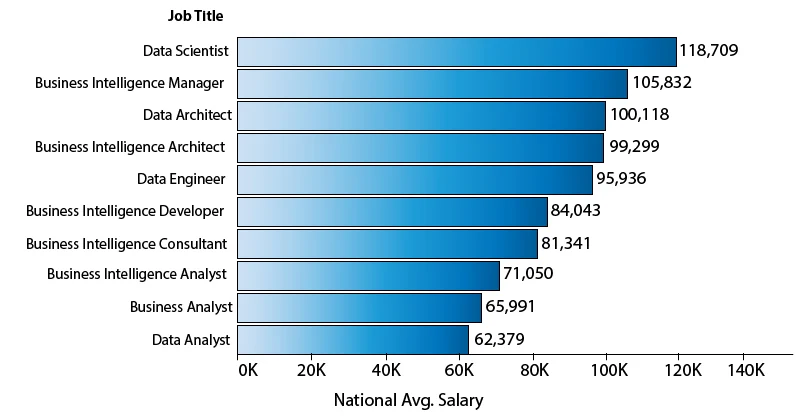
              People who have graduated with Bachelor’s in Data Science have high-salary jobs. Due to the critical roles and responsibilities that data scientists carry, you are rewarded with the highest salaries. According to Glassdoor, the average salary for a Data Scientist is $117,345/yr which is 168% more than the national average salary.

              average salary for a data scientist

              Source: https://data-flair.training/blogs/why-learn-data-science/ 

              Business growth

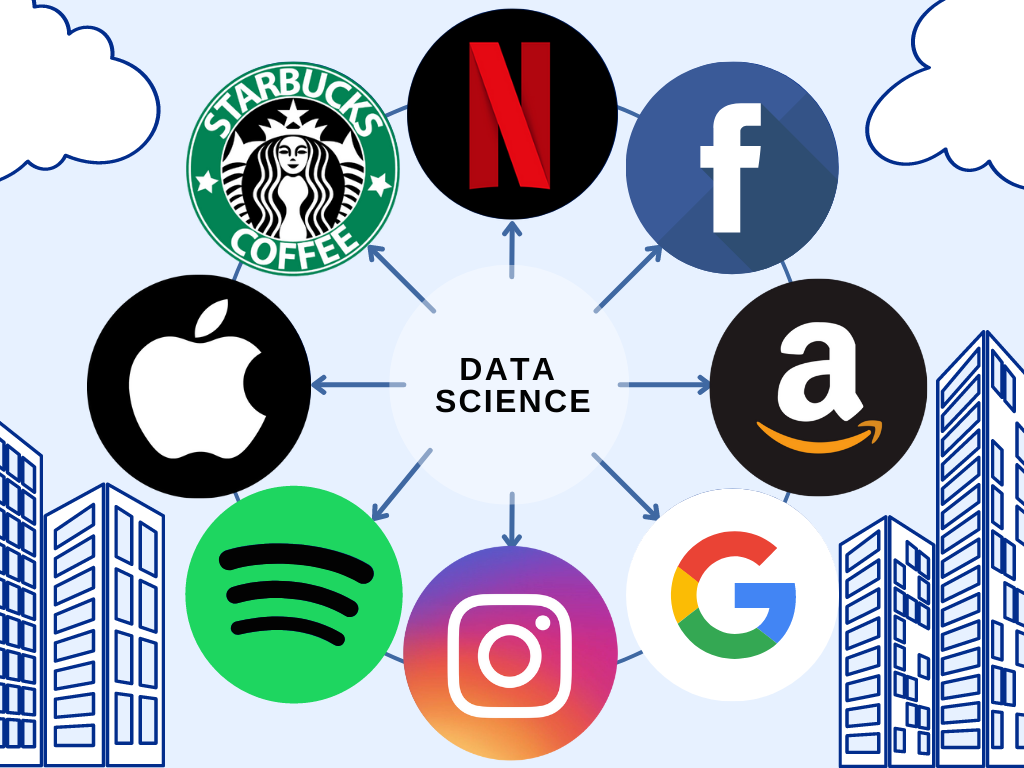
              Nowadays, Data metrics are driving every business decision. Giant companies like Amazon, Apple, Google, Spotify, Facebook, Instagram, Starbucks, Netflix, etc. have been using data science from an early age. These companies are searching for manpower with an undergraduate degree in Data Science. 

              Predictions

              Bachelor in Data science degree helps you in visualizing data that is understandable for business stakeholders to build future roadmaps and trajectories. It helps to minimize business uncertainty and discover trends. 

              For Example:- We can predict the probability of a person winning an election through data science tools. 

              Decision Maker

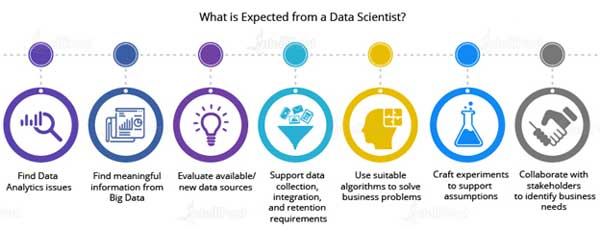
              Data Scientists are an integral part of any organization. Data scientists are the ones who read and analyzed, and with a large amount of data, the importance for a data scientist is to read the data and make data-driven discoveries. 

              As a data scientist, you will be the decision-maker of the organization where you will be handling immense amounts of data. 

              High Job Placement

              Due to the gap between demand and supply where there are fewer data scientists and more demand in the business world, job placement will be easier if you have the necessary skill sets. 

              With the help of a degree in data science, you will be able to achieve those skill sets. It is also a highly rewarding career where your growth will be unpredictably tremendous.

              What skill sets do you need to excel in to become a data scientist?

              skillsets to become a data scientist
              Fig: Skillsets to become a data scientist

              Source: https://www.exeideas.com/2022/05/skills-to-become-a-data-scientist.html 

              With Bachelor’s in Data Science degree, you will be able to learn all the basic skill sets you need to ace as a data scientist. If you want to pursue Data Science as your career, then, here are four core skills, you will need, to understand Data Science properly.

              Statistics and Probability

              Start by knowing the basics of Statistics and Probability. These are the major mathematical concepts of Data Science. 

              You should be able to understand descriptive statistics where the topics include mean, median, and mode, linear regression, and hypothesis testing. Probability is also a very important part of data science as it is a precondition for mastering machine learning. 

              Programming Language

              There isn’t any specific programming language for Data Science. However, Python and R are popular programming languages in this field. 

              Moreover, Python is the most preferred language by professionals due to the libraries and modules it provides. Along with that, most data teams also prefer Java, Scala, and C++ according to their needs.

              Machine Learning and Deep Learning

              Machine Learning and Deep Learning are two separate topics and the subsets of Data Science. Learning the basics of these domains will help you understand Data Science conveniently. 

              Machine Learning and Deep Learning help in high-value predictions. It helps in analyzing a large amount of data, making the tasks of data scientists easier with an automated process and without any human intervention.

              Data Visualization

              Data scientists love Data Visualization. Representing data in the form of charts and graphs which helps other people to understand the data and make it more profitable. It helps in discovering the trends in data and is interactive. 

              To learn these skill sets of Data Science in Nepal, you can learn through different short as well as long-term courses provided by Sunway College Kathmandu affiliated with Birmingham City University (BCU).

              A conclusion

              Data Science is not only about making sense of data. 

              In reality, it is about recognizing business issues and addressing them with analytical solutions. To gain that skill, a degree in Data Science will be helpful for your journey to becoming a successful data scientist.

              Our opportunity for +2 passed Students 

              If you are a fresher and just have passed +2, then you may have participated in the 7 Days Digital Marketing and Data Science Bootcamp conducted by  one of the best IT colleges in Kathmandu, Sunway College.

              Sunway College had been regularly organizing Rs.30, 000 worth of courses free of cost for students and professionals. These workshops were given by industry experts having more than 10 years of experience in the Data Science and Digital Marketing field. 

              After completing the Data Science and Digital Marketing Bootcamp, the students were given a project to work on. Any two best projects were rewarded with Rs.10, 000 worth of cash prize.

              Free 4 days session/workshop on Data Science and Artificial Intelligence as a career for +2 students is currently running. Online or physically, you can join either way, if you have not participated in it yet. You can apply for the workshop to participate in the boot camp.

              Moreover, if you are thinking about pursuing an undergraduate degree in data science and artificial intelligence then you are in for a treat.

              Sunway offers BSc (Hons) Computer Science and Artificial Intelligence. in academic partnership with Birmingham City University (BCU), UK, one of the world’s highest ranking universities, the course is designed to equip with the cutting-edge skills required to satisfy the global demand for data scientist, machine learning, and artificial intelligence roles and thus building a rewarding career.

              It is a 4-year long degree with total credit points of 480 credit hours. 

              And, what makes the course even better is a 9 month paid professional placement based on the UK sandwich course layout.

              Help yourself align your passion with your profession.

              Don’t know where to begin? 

              Start With Sunway (Be industry-ready before you graduate.)

              IoT Based Automatic Water Temperature Adjustor by Sabin Shrestha 

              At Sunway College, we have a dedicated research lab (Sunway College Research Lab) where we focus on experimenting and researching different IoT-based devices. Our mini research is also one of the most loved workplaces for some of our robotic geeks. We provide drones, 3D printers, and other essentials that our students request for their research.  One of our IoT Enthusiast, Sabin Shrestha (and team) have developed an IoT Based Automatic Water Temperature Adjustor. 

              Let us have an insight into this from Mr. Sabin Shrestha himself.  

              Hello, I am Sabin Shrestha, a Student at Sunway College Kathmandu (March 2021 Intake). Let’s have a good insight on IoT Based Automatic Water temperature adjustor. 

              Water Heating: Till Now 

              Water heating is part of energy utilization and is a process that is as old as human history. As the mode of water heating is changing from the use of the sun to modern-day electricity. Engineers have now designed and developed a lot of heating water systems. Some of them are geysers, Water heating rods, Solar Water heaters, and many more. 

              There is much importance of hot water to humankind. This can be a reason why water-heating systems are indispensable and we find them in almost every personal and commercial residences. 

              In the present time, people are facing many difficulties while using heating systems. Waiting for water to heat is a waste of time. There are many aware difficulties we face such as high electricity consumption, hazardous systems, overheating, no mobile accessibility, and the inability to adjust the temperature.

              As our project prototype, we have designed and constructed an automatic water-heating unit. The system is an automatic temperature adjuster that controls a powerful heater in a hot water storage vessel. It has two fixed temperature settings; one is for turning ON the water heater and another is for turning OFF. 

              Let us rewind the project from its basics. 

              What is an IoT-Based Automatic Water Temperature Adjustor

              The rise of IoT (Internet of Things) is one of the most rapid and fascinating advances in information and communications technology.  

              The term “Internet of Things” (IoT) describes a network of actual physical items that have sensors, software, and other technologies built into them in order to communicate and exchange data with other systems and devices through the internet. The system ‘IoT Based Automatic Water Temperature Adjustor’ is for adjusting water temperature according to the possible surroundings temperature, humidity, and water temperature. 

              Why did we make an IoT-based Automatic Water Temperature Adjustor? 

              There are several problems with the manual water heater. There’s usually a problem with the high-water temperature. Because of this, most water heaters consume high power and lead to higher electricity bills. We also face a problem by adjusting ourselves to use the device usually at constant water temperature. Considering these problems, we made an IoT Automatic Water Temperature Adjustor. 

              Tools to operate IoT-based Automatic Water Temperature Adjustor 

              To operate this system, these are the following tools we used: 

              • Arduino 
              • DHT11 (Temperature-Humidity Sensor) 
              • Bread Board 
              • DS18B20 (Water Temperature Sensor) 
              • Jumper Wires 
              • Resistor 
              • I2C OLED 
              • Water Heating Coil  &
              • Relay and LED. 

              Applications and Advantages of IoT-based Automatic Water Temperature Adjustor 

              The application of this system is very vast as it can be implemented in power plants, hospitals, mountain regions, local homes, dormitories, and lodges. This system is time-saving and cost-efficient, and easy to implement. The tool provides an automatic temperature adjustor, less power consumption, safety, and many more. 

              An IoT-based automatic water temperature adjustor is better than other systems as it automatically detects and adjusts the water temperature after it senses the environmental temperature. This system is still in its developing phase but was able to show the results accurately. 

              Now, let’s understand automatic controls and our project.  

              Automatic controls and IoT-Based Automatic Water Temperature Adjustor 

              Automatic control is an enormous term. It covers the control of many variables such as pressure, temperature, flow, level, speed, and many more. In this modern society, there are still a lot of systems that we can make efficient and automatic using IoT. 

              IoT Based Automatic Water Temperature Adjustor is one of the automatic controlling systems around the world. The difference is that is this system is an automatic water temperature adjustor that adjusts to the temperature and humidity of the atmosphere or environment to which it is applied.  

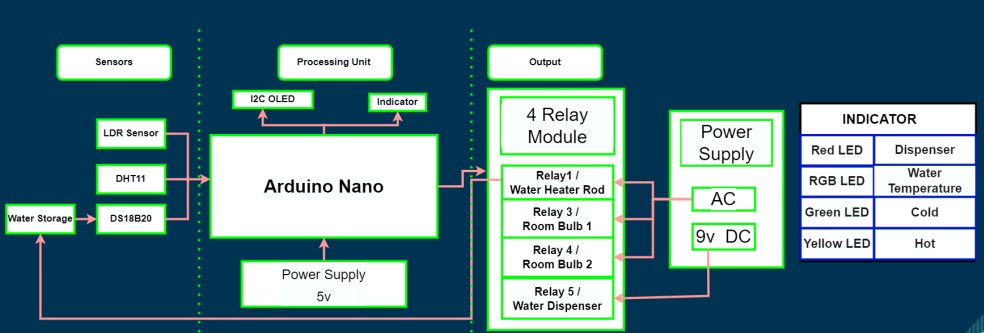
              This project falls under the category of Environmental Engineering. This system has the capability of collecting temperature data of both atmosphere and water. For this, the system involves two different sensors for collecting temperature information, one is DHT11 and the other is DS18B20. 

              Development Processes of IoT-based Automatic Water Temperature Adjustor 

              We have divided the development process into the following steps:

              Research about the project 

              We researched system usability, understanding of the recently adopted system, project advantages, project scopes, disadvantages, previous system processes, systems requirements, mechanical parts, and problems related to the water temperature adjustor. 

              Designing and defining pins on Arduino: 

              system pin allocation of iot based water temperature adjustor
              system pin allocation of IoT-based water temperature adjustor

              In this phase, we developed the system flowchart and the design of the system. After the design, we made the pins which will denote the certain mechanism in the system allocated.  

              Mechanical Setup According to design: 

              In this phase, we set up the mechanical parts according to the design and assigned the pins accordingly. We utilized Mechanical parts such as Arduino, DHT11, DS18B20, Water Heating Coil, I2C OLED, Resistors, Potentiometers, Bluetooth Module, Jumper wires, Relay, and LED. Finally, we connected all devices to the central device, which is Arduino. 

              Technical Setup for IoT-Based Automatic Water Temperature Adjustor

              In a technical setup, we downloaded the libraries, and we wrote the code to make the system function automatically. We also uploaded the program for the system in the Arduino so that the system works properly. Now, Through the code, we assigned each individual device the task to be performed. In this phase, we made the soul of the system which makes the system automatic. 

              In the code, DHT11 Sensor first senses the temperature of the atmosphere and then analyses the temperature of the atmosphere if it is hot or cold. When the temperature is hot the system turns off the heater. When the atmosphere is cold, the system turns on the heater. After the heater is on, the water temperature will increase progressively.  

              The DS18B20 sensor, a water temperature sensor, also works parallel to sense the temperature of the water. While water is heating, the water temperature analyses the temperature of the water. If the water reaches its preset temperature which is 43 Centigrade, the heater will turn off automatically. 

              We also set a Bluetooth module to set the range of the water temperature using a mobile application so that the user can manipulate the temperature of the water as needed. The option for the system to turn on or off was also provided in this application. A crucial aspect involved in this step is the maintenance of the code. 

              Data collection and analysis phase for IoT-Based Water Temperature Adjustor

              In this phase, we collected and analyzed the data. The data is shown in a serial monitor where it is analyzed and compared with the thermometer to check the accuracy. Tools we used to show the were thermometer, and I2C.

              Creating prototype and testing: 

              prototype of iot based water temperature adjustor
              prototype of IoT-based water temperature adjustor

              Now, we created a prototype by joining all the hardware components and designing the project’s outlook. The prototype we created is system tested to confirm if the system is working or not. To collect the data, we examined the system in the room to check various aspects of the system, some of which include checking if it is working or not, and even if the provided data is right or not.

              Result & Analysis 

              IoT-based automatic water temperature adjusts or reads the temperature of any atmosphere to find if the condition of the atmosphere is hot or cold and gives output by adjusting the temperature of the water as required for the user automatically. 

              As a result, we tested the system for the room where it was made. The result of the room is measured, which mostly lies between 14 degrees centigrade to 20 degrees centigrade in the winter season.  The result shown in Arduino ide’s serial monitor, LCD display, and the water temperature thermometer’s serial monitor is compared. 

              Acknowledgment 

              I would like to express my warm thank you to Sunway College Kathmandu as well as the friends and teachers who helped and encouraged me to complete this project. 

              Also, I am equally grateful and thankful to Akash Deo and Saddam Hussain of Sunway College Kathmandu. I would also like to express our gratitude to all of our friends, Brainycube, and the Sunway family for their assistance and support in making this project a reality. 

              Conclusion 

              Conclusion?

              We successfully designed, developed, and tested the IoT-based Automatic Water Temperature Adjustor system. There were some updates as well in this system such as replacing I2C LCD with I2C OLED, making applications for the system, and others. The IoT-based Automatic Water Temperature Adjustor project was able to maintain the temperature of water at the preset temperature range after reading the temperature atmosphere. It triggers the LED that creates awareness when the heated water has reached its maximum preset temperature. The components used in building the system were readily available. 

              The IoT-based Automatic Water Temperature Adjustor system could be useful in homes, offices, factories, hotels, cafeterias, manufacturing processes, laundries, industries, thermal electric generation plants, etc. In the future, we can apply the whole system automation using Wi-Fi, make the size and weight of the system smaller, applying in other temperature-related systems, and many more. 

              The possibilities are endless which we will continue to explore in Sunway College’s research lab and beyond that.